

Texture and material layering is what separates a space that feels considered from one that feels flat. Two rooms can share the same layout, the same palette, even the same budget — and one will feel rich and intentional while the other feels cheap and unfinished. The difference is almost always depth: how surfaces, finishes, and materials are combined. Here is how layering works, and how to use it in any interior.
Why Flat Interiors Fall Flat
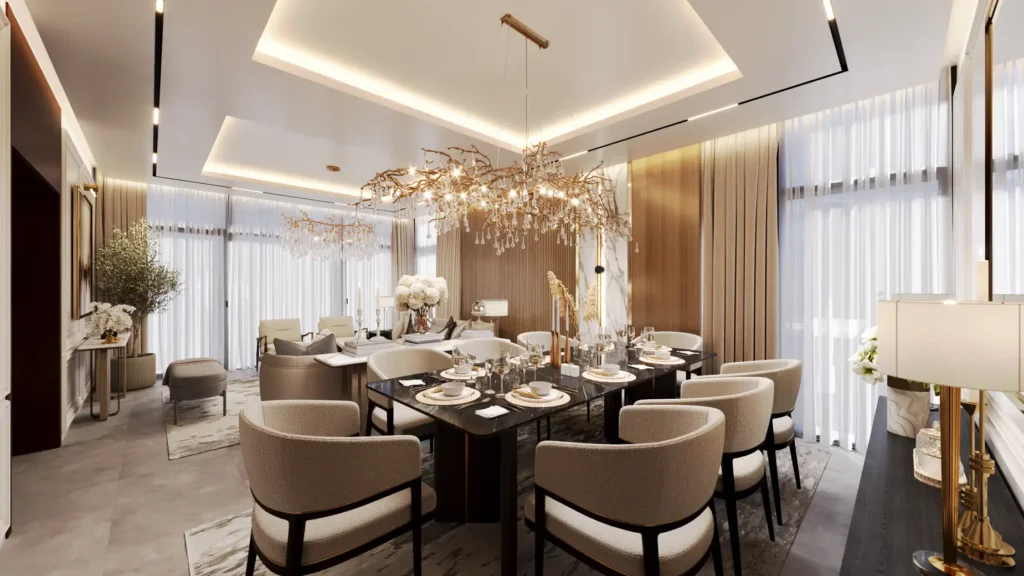
A space built from a single finish has nothing for the eye to explore. Everything reads at once, and the result feels thin no matter how expensive the materials are. Depth comes from variation — the interplay of rough against smooth, matte against sheen, hard against soft. That contrast is what makes a room feel layered and complete.
Start With a Base, Then Build
Good layering begins with a dominant material that sets the tone — a timber, a stone, a plaster, a primary textile. Everything else is built in relation to it. Treating one finish as the foundation keeps the scheme grounded and stops a space from feeling like a collection of unrelated samples.
Mixing Materials: Contrast and Balance
The most effective interiors pair materials that behave differently:
- Smooth and rough — polished stone beside raw timber or textured plaster
- Matte and reflective — honed surfaces against glass or brushed metal
- Hard and soft — joinery and stone balanced by upholstery and drapery
- Natural and man-made — organic grain alongside engineered finishes
Contrast creates interest; balance keeps it from tipping into chaos.
The Role of Light and Touch
Texture only reveals itself under the right light. A raking or grazing light brings out the grain, weave, and relief that flat lighting hides entirely. Layering is also tactile — people read a space through what they touch as much as what they see, which is why surfaces within reach deserve as much attention as the ones on display.
Layering Without Overdoing It
The common mistake is variety for its own sake. Too many competing textures and a space becomes restless. The discipline is simple: vary the texture, but keep the palette tight. A limited range of tones lets multiple materials sit together as one cohesive language rather than a clash.
Where Layering Meets Craft
Layering lives in the detail — the way a timber meets a stone, the reveal between two finishes, the precision of a joint. That is where bespoke joinery earns its place, carrying the material language through a space exactly as specified. With design, production, and build under one roof, Monolith’s in-house team keeps that continuity intact from drawing to installation. For the full picture, read our guide on the interior design and construction process.
Ready to Add Depth to Your Space?
If your next interior should feel layered, tactile, and intentional rather than flat, let’s talk.