

Acoustic planning in hospitality and retail spaces plays a critical role in shaping the overall customer experience. Sound is one of the most influential yet frequently overlooked elements of interior design. Poor acoustic conditions can negatively affect customer comfort, staff communication, and brand perception.
Excessive noise, echo, and uncontrolled reverberation can make even beautifully designed interiors feel chaotic or uncomfortable. Effective acoustic planning in hospitality and retail spaces ensures that environments not only look visually appealing but also support comfort, communication, and operational efficiency.
Thoughtful acoustic strategies allow businesses to create spaces where customers can relax, engage, and enjoy the intended atmosphere.
The Role of Sound in Customer Experience
Customers respond instinctively to the sound environment of a space. In retail stores, excessive noise may reduce browsing time and negatively influence purchasing behavior. In restaurants and hospitality venues, poor acoustics can disrupt conversations and diminish the overall atmosphere.
Important acoustic considerations include:
- Background noise control
- Speech intelligibility in shared spaces
- Minimizing sound transfer between activity zones
- Controlling reverberation for comfort
By prioritizing acoustic planning in hospitality and retail spaces, businesses can create environments that feel welcoming, encourage longer visits, and reinforce a positive brand image.
Acoustic Challenges in Hospitality and Retail Environments
Hospitality and retail interiors often present complex acoustic challenges due to their architectural characteristics.
Common issues include:
- Open floor plans with hard reflective surfaces
- High ceilings and glass façades that amplify reverberation
- Multiple activity zones generating varying noise levels
- Mechanical systems contributing to background noise
Without proper acoustic planning in hospitality and retail spaces, these conditions can create environments that feel stressful or overwhelming for both customers and employees.
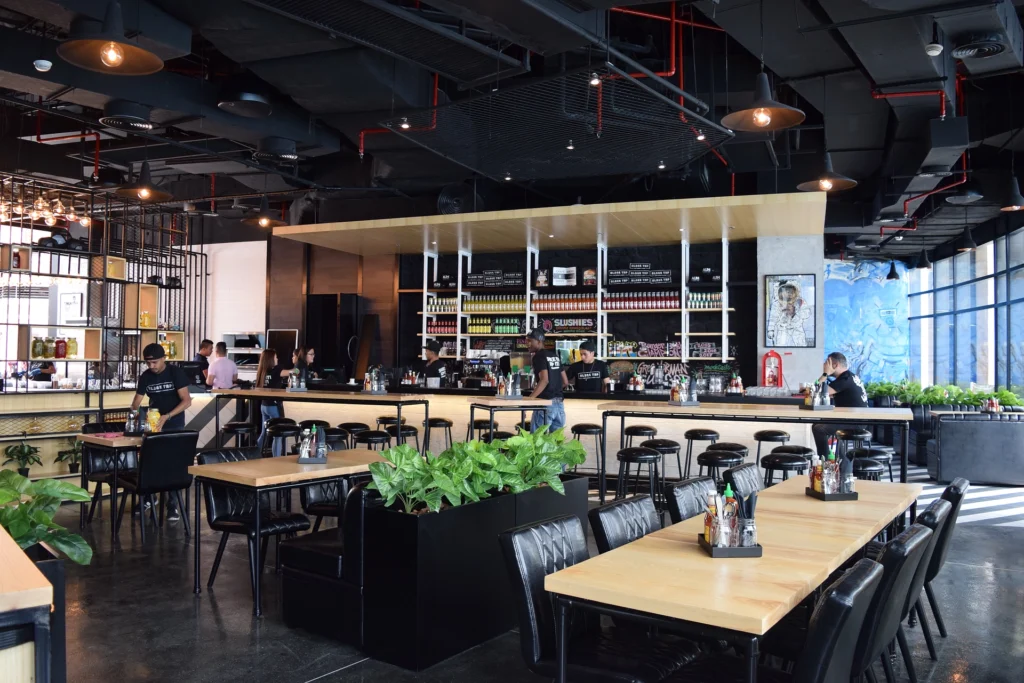
Acoustic Design Solutions and Material Strategies
Effective acoustic control requires a combination of design planning and material selection. Various strategies can help regulate sound levels while maintaining aesthetic appeal.
Common acoustic solutions include:
- Acoustic ceiling panels and wall treatments to absorb sound
- Carpets, rugs, and upholstered furnishings to reduce impact noise
- Zoning and partitioning to separate loud and quiet areas
- Sound masking or background music systems
- Mechanical system noise management
Strategic acoustic planning in hospitality and retail spaces ensures that materials and design solutions work together to create balanced and comfortable sound environments.
Operational Benefits for Staff and Service Teams
Acoustic comfort does not only benefit customers. Employees also rely on clear communication and manageable noise levels to perform effectively.
Well-designed acoustic environments support:
- Clear communication between staff members
- Reduced operational errors in service areas
- Improved concentration in back-of-house spaces
- Safer and more efficient workflows
By investing in acoustic planning in hospitality and retail spaces, businesses support both operational performance and employee well-being.
Integrating Acoustic Design with Interior Aesthetics
Acoustic solutions should never appear as an afterthought. Instead, they should be integrated seamlessly into the overall design concept.
Successful projects involve collaboration between designers, acoustic specialists, and contractors to ensure that materials, layouts, and systems work together effectively.
When integrated properly, acoustic planning in hospitality and retail spaces enhances comfort while preserving the intended visual identity of the space.
Conclusion
Acoustic planning in hospitality and retail spaces is essential for creating environments that are comfortable, functional, and memorable. Poor sound control can negatively impact customer satisfaction, staff efficiency, and overall brand perception.
By incorporating thoughtful acoustic strategies and materials, businesses can create interiors that support communication, comfort, and operational success.
For professional guidance on acoustic planning in hospitality and retail spaces and full-service interior design and construction solutions, contact Monolith Interior Design and Construction to discuss your next project.